History
Est. 1937
The Flint Hills PRCA Rodeo is the oldest consecutive rodeo in the state of Kansas.
History of the Flint Hills Rodeo
Simply put, the Flint Hills Rodeo started in a Chase County pasture in 1937. Having an impromptu rodeo in a pasture in ranch country was a fairly common practice at the time.
But to start a rodeo and keep it going, that is an accomplishment. Making that rodeo bigger and better over the years, this is uncommon.
For this reason, we consider the details of how the Flint Hills Rodeo was born and raised to be a worthwhile story to tell.
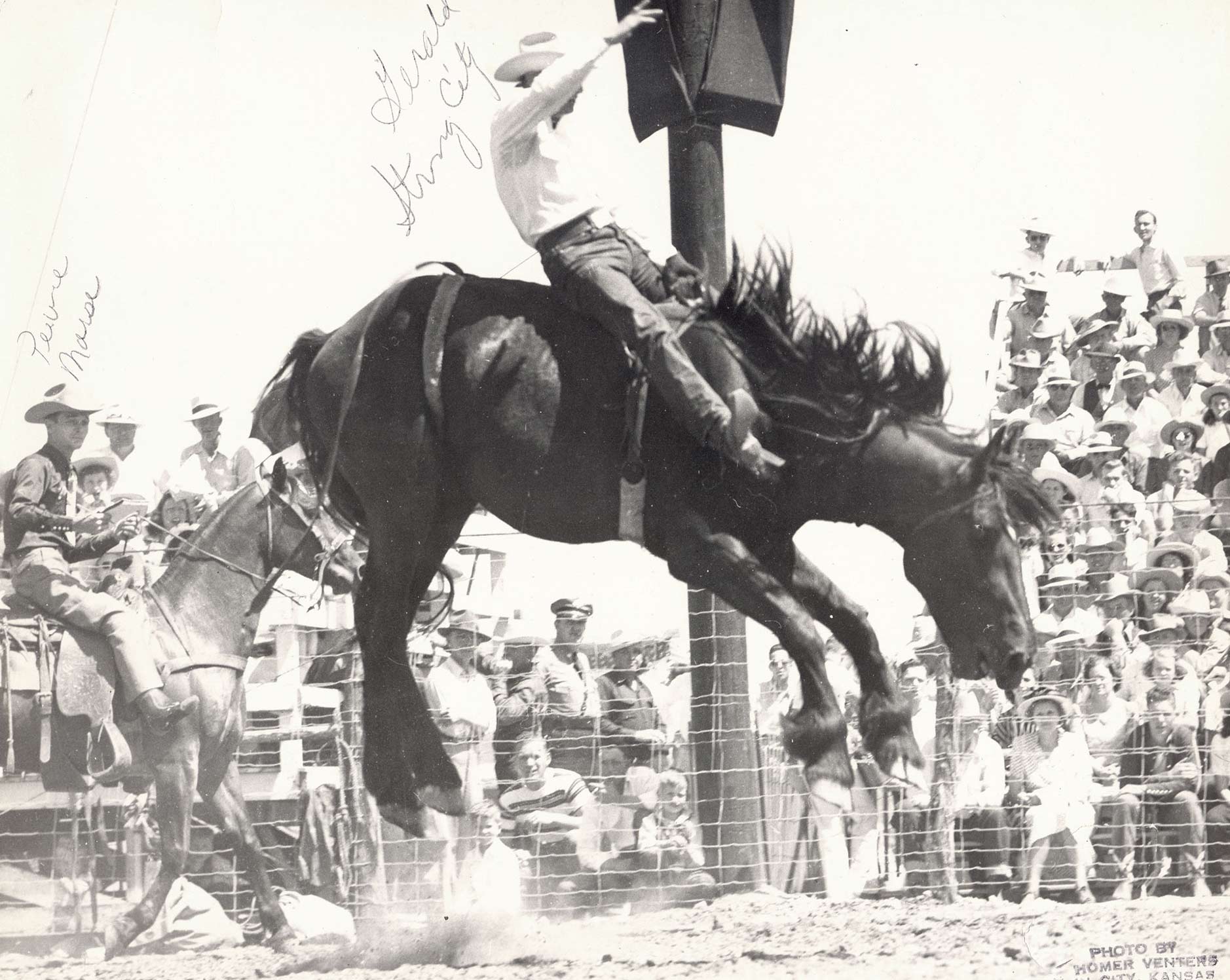
If this was only a simple two-bit show, the story may be less than interesting. But the Flint Hills Rodeo started as the “home court” of the E.C. Roberts family of Strong City, a clan with half of the kids winning world championships in rodeo.
Red Dougherty, a former competitor, calls the Flint Hills Rodeo a who’s who of rodeo. The Flint Hills also is the oldest consecutive rodeo in Kansas. These distinctions are surprising when you consider what the Flint Hills Rodeo has ridden through.
When Wally Evans of Emporia spoke of the rodeo’s early days, he often used the term, “cobbled together.” Evans was the last of the original Flint Hills Rodeo board of directors. But cobbled together as it may have been, the event quickly took shape and attracted professional cowboys from other states to compete in time for its second annual event in 1939 and each year ever since.
The Flint Hills Rodeo had the Cowboy Turtle Association’s stamp of approval in the early years, followed by the Rodeo Cowboys Association’s blessing, and in the most recent years, the PRCA – the Professional Rodeo Cowboy Association’s endorsement.
The Flint Hills Rodeo is still at home in Chase County, in the cattle country of the Kansas Flint Hills. This area’s living history is seen in herds of cattle grazing on the hills’ bluestem grass.
Bluestem thrives in thin soil where stone is often just below its root system. This grass has ties with the Flint Hills Rodeo since each has found a way to thrive in spite of its situation. Bluestem grows well in thin, rocky soil.
The Flint Hills Rodeo prospers with even though its roots are traced to beginning in the Great Depression, counting on lots of volunteer help, continuing through wars and weathering tough times in the cattle business. This rodeo is a tried and true treasure which is put on each year, rain or shine.
The story of the Flint Hills Rodeo is what I call a braided tale. The Roberts family, community people, local ranching, the Rodeo board, and the Flint Hills themselves are woven often seamlessly into its history. Additional plaits in the braid are weather, the parade, rodeo cowboys and cowgirls, and the stock.
Gerald Roberts said he was the first to use a nine plait braid in a rope for bull riding. Nine plaits make for a sturdy rope that can be counted on when riding a huge, unpredictable bull into the rodeo arena.
In the same way, the Flint Hills Rodeo has ridden through the best of times and the worst of times using a strong braid of several assets.
Cobbled together at first, maybe. Tried and true over eighty years, without a doubt.
The Roberts Family Tradition
The Flint Hills Rodeo began from a regular practice in the 1930’s of staging pasture rodeos at the farm of Emmett “E. C.” Roberts near Strong City, Kansas. 1937 is marked as the birth year of the Flint Hills Rodeo. It was only a natural step when E. C. Roberts, along with his son Ken Roberts and his son-in-law Eddie Boysen, put on what they called the First Annual Chase County Rodeo in 1938, which was sponsored by the local American Legion Post.
The rodeo was renamed the Flint Hills Rodeo the following year, a newly formed Flint Hills Rodeo Association was formed, and the rodeo has kept going without fail ever since… well, except in 2020, when it was canceled due to the COVID pandemic. That pause put the event’s numbering off by one year. Since the first rodeo took place in 1937, and the second — titled “The First Annual”—was held in 1938, and we skipped a year in 2020, we are celebrating the 88th Annual in 2026.
Today, the Flint Hills Rodeo holds the distinction of being the oldest consecutive rodeo in Kansas. The rodeo is held annually at the end of May or first weekend of June in Strong City, Kansas, using the same arena and grounds built for the event back in 1948.
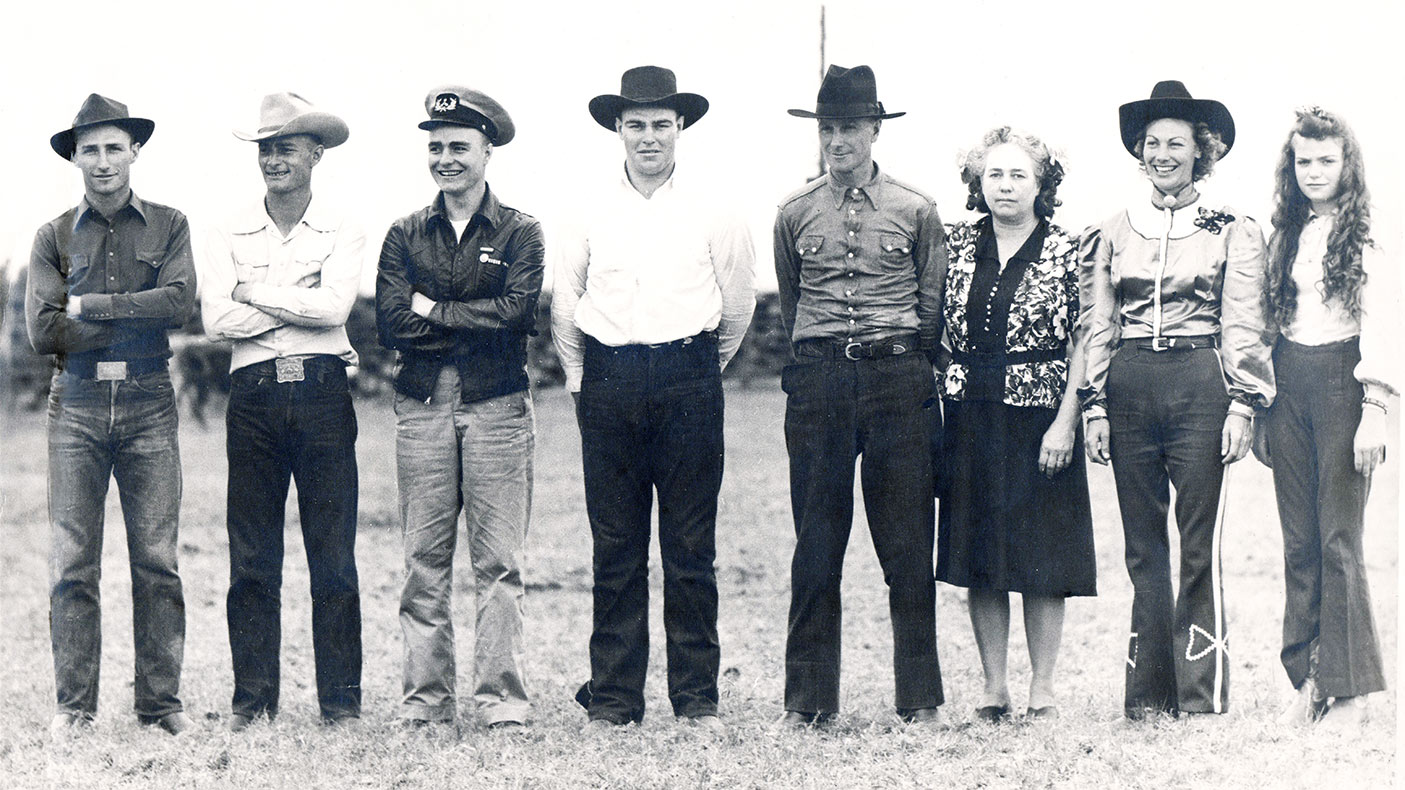
The Roberts Rodeo Family: Pictured (L to R): Ken, Gerald, Clifford, Howard, E.C., Clara, Margie, Gloria Ann Roberts
Photo: The Roberts Rodeo Family: Pictured (L to R): Ken, Gerald, Clifford, Howard, E.C., Clara, Margie, Gloria Ann Roberts
Rodeo Honors for the Roberts family
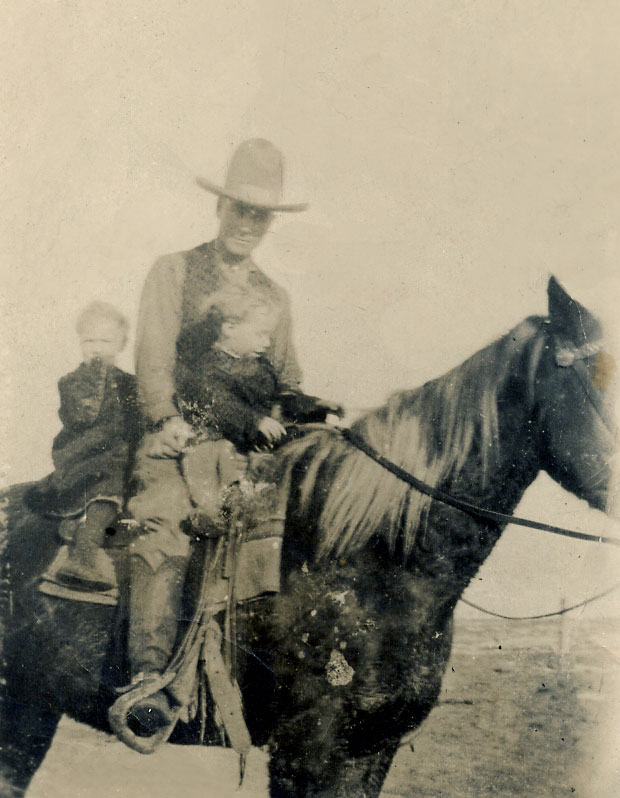
Emmett “E.C.” Roberts
A Legend in His Time; Bronc Rider; Founder of the Flint Hills Rodeo
At the helm of this hard-working ranching family were E.C. Roberts and his wife Clara. E.C. married Clara Marie Suebert on December 23, 1914 in Council Grove, Kansas. Emmett Chester Roberts, born February 11, 1895, was a respected cowboy and rodeo and stock producer who started Roberts Rodeo Company. He’d been born when horses were still the only mode of transportation – horses became his life, his business (Frank Buchman, Grass & Grain – Hey Neighbor, Sept 1992). E.C. Roberts was named Mr. Rodeo by the Professional Rodeo Cowboys Association at the Denver Stock Show in 1979, and was inducted into the National Rodeo Hall of Fame in 1984. E.C. started the annual Flint Hills Rodeo in Strong City, Kansas at his ranch in 1937.
Marjorie Roberts
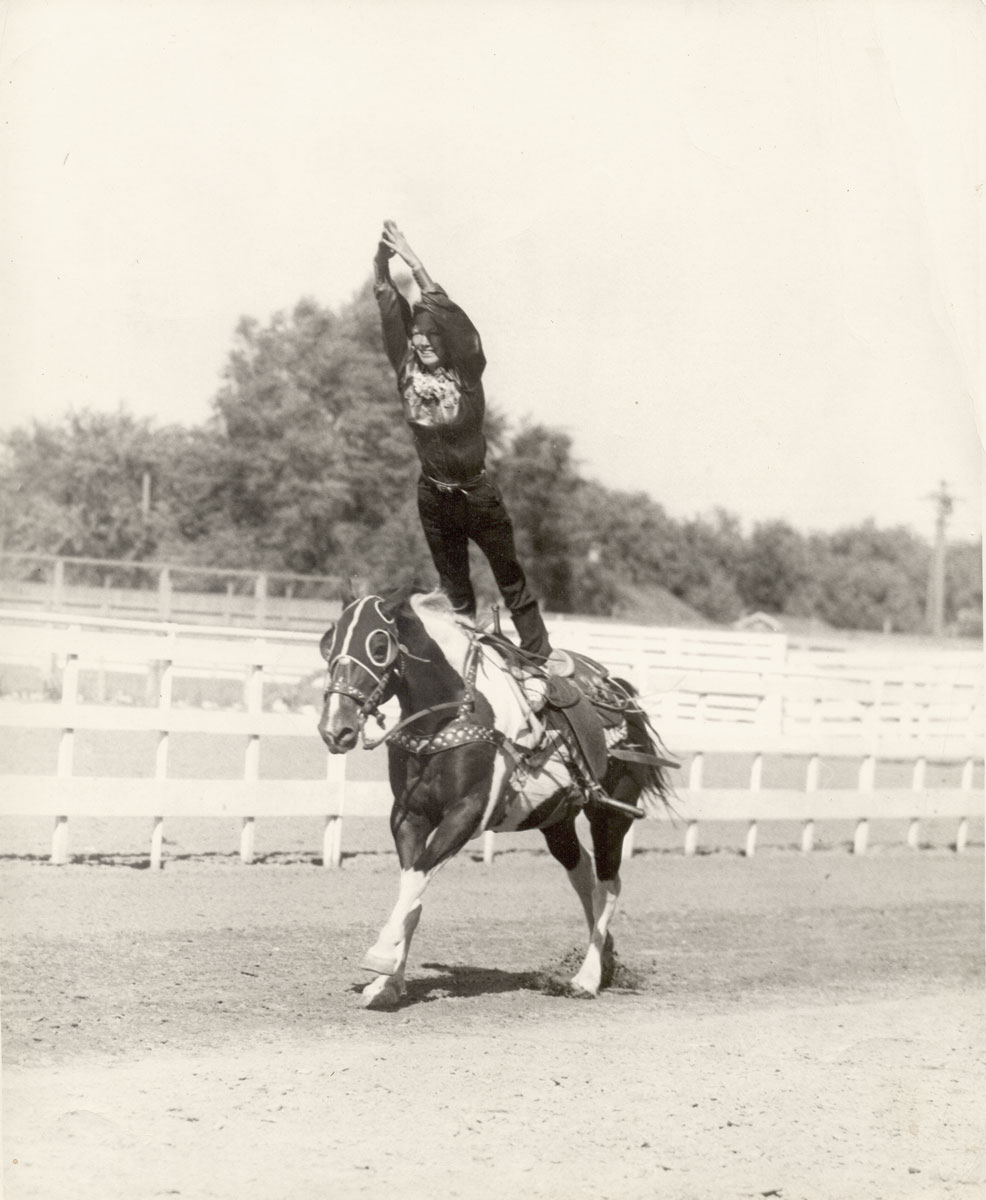
1940 Champion Women’s Bronc Riding, Renowned Trick and Fancy Rider
Marjorie Roberts, also called Margie or Marge, was born in 1916 to Emmett and Clara Roberts. Emmett placed her on a horse as soon as she could sit well. She loved the “ponies” and she and they soon learned how to act as a unit.
When she was 13, she went with the Clyde Miller Wild West Show during the summer. Upon graduation, she joined the show full time, where she was later joined by Ken and Gerald. She married Eddie Boysen and they began producing some rodeos, in addition to their performing.
Margie’s bronc riding was spectacular. She was real showy, whooping and hollering every time the bronc hit the ground. According to historian Don Bell, Marge won the women’s bronc riding at Cheyenne, the equivalent of a world’s champion, in 1940. At that point in time world championship titles were not awarded. Besides bronc riding, Margie also had a trained horse act and did exhibition trick riding. Click here to see Annie Wilson’s tribute song to Margie Roberts.
Margie Roberts was inducted into the National Cowgirl Hall of Fame in Fort Worth, Texas in 1987, and the Kansas Cowboy Hall Fame in 2016.
Ken Roberts
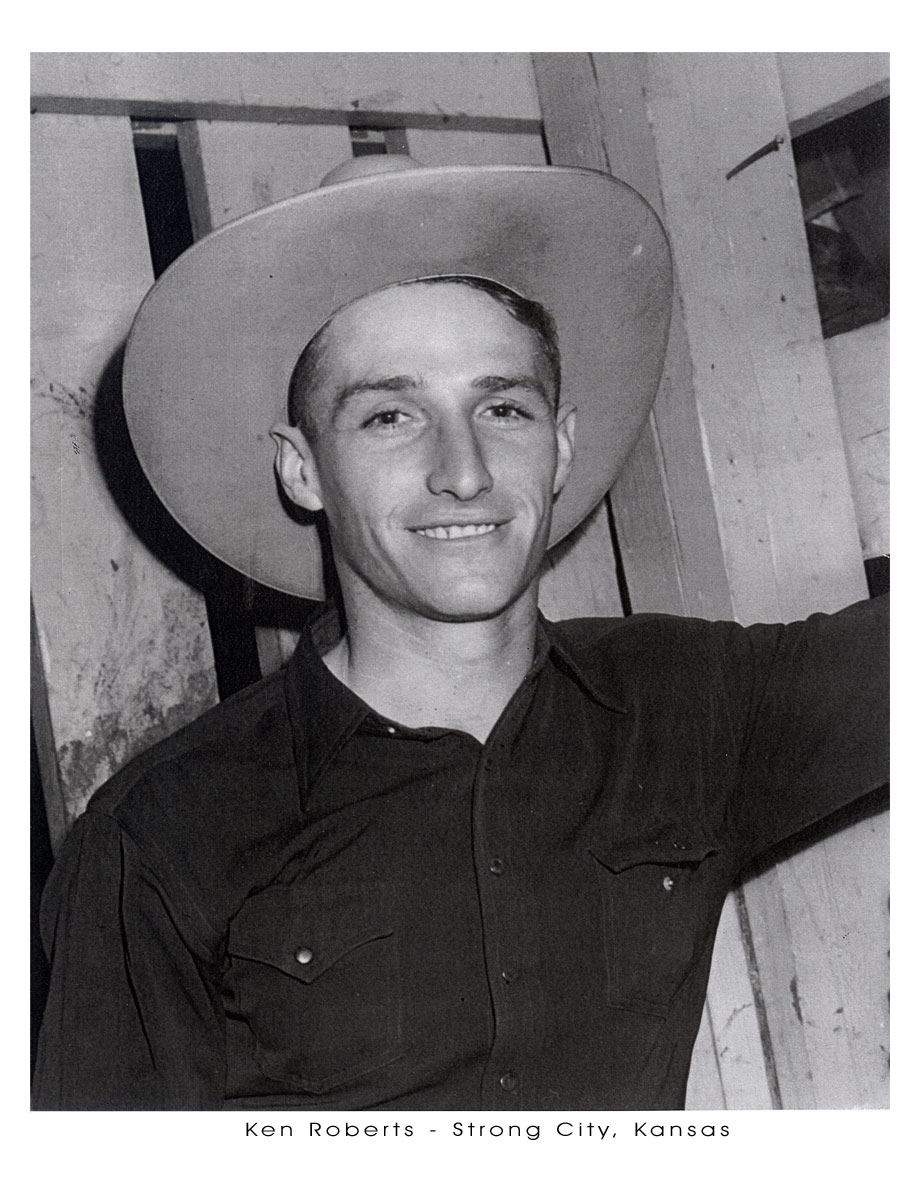
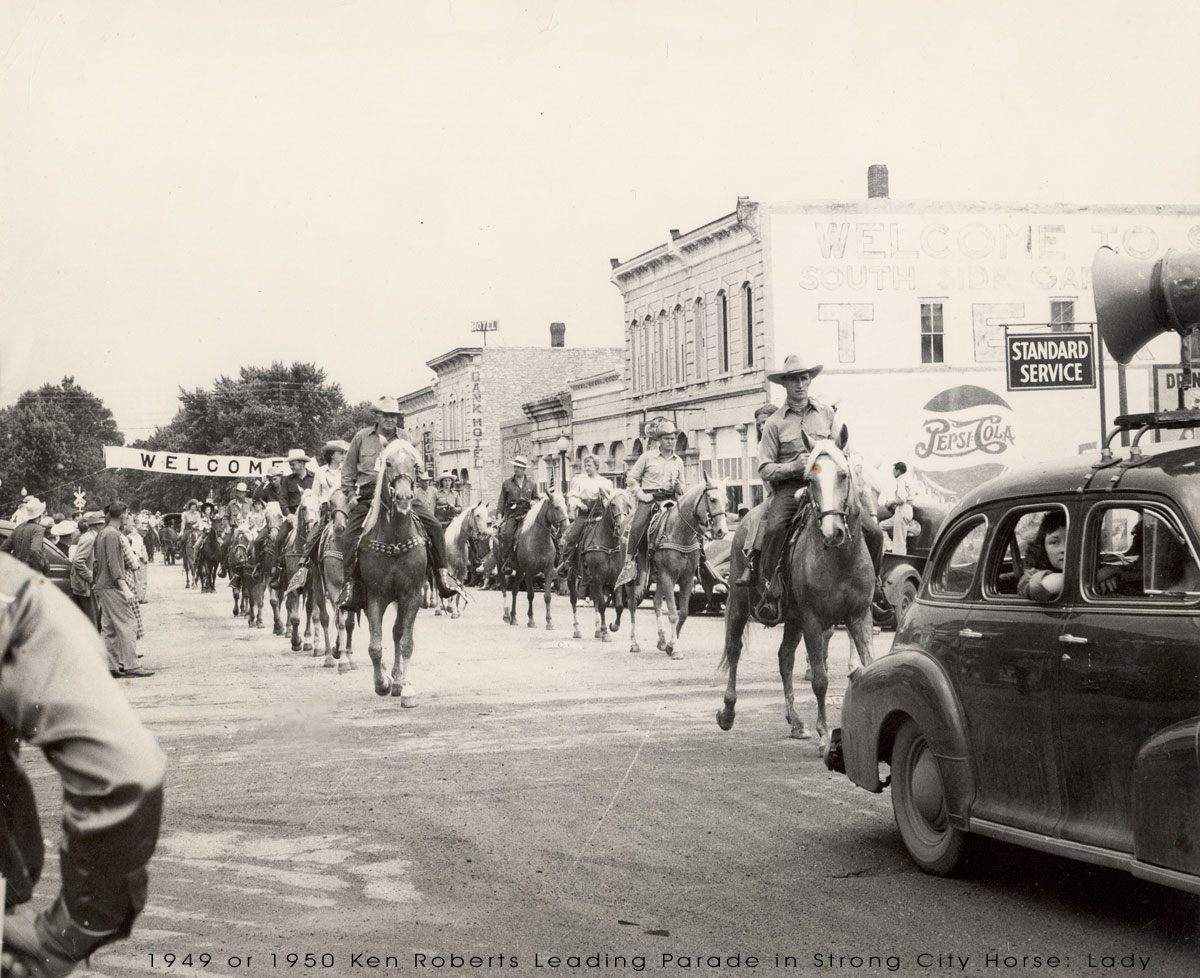
World Champion Bull Rider 1943, 1944, and 1945
Born January 22, in 1918 in Council Grove, Kansas – Died September 12, 1975 in Strong City. Ken, like his brother and sister grew up around cattle and horses. He was always giving credit to Marge as being his toughest competition and credited her with leading him and Gerald into pro rodeo. To be a world champion you have to enter as many rodeos as possible, and to score the highest possible points as often as you can. The animal you draw has much to do with it. A bull will try to stomp you or horn you when he throws you. A horse will usually try to jump over you. Ken learned to ride bulls by doing just that. The story is told about him learning to ride an especially ornery bull. Every day for a over a week that bull threw him. Several times Ken was unconscious. He finally figured the secret of guessing which way the bull was going to move by sensing his muscle movement. Ken said one of the disadvantages of rodeoing is the inability of the performers to get adequate insurance.
Ken was an original inductee in the National Rodeo Hall of Fame in Oklahoma City, an inductee in the Pro Rodeo Hall of Fame, the Kansas Sports Hall of Fame in 2009, and an inductee to the Bull Riding Hall of Fame in Fort Worth, Texas in 2019.
Gerald Roberts
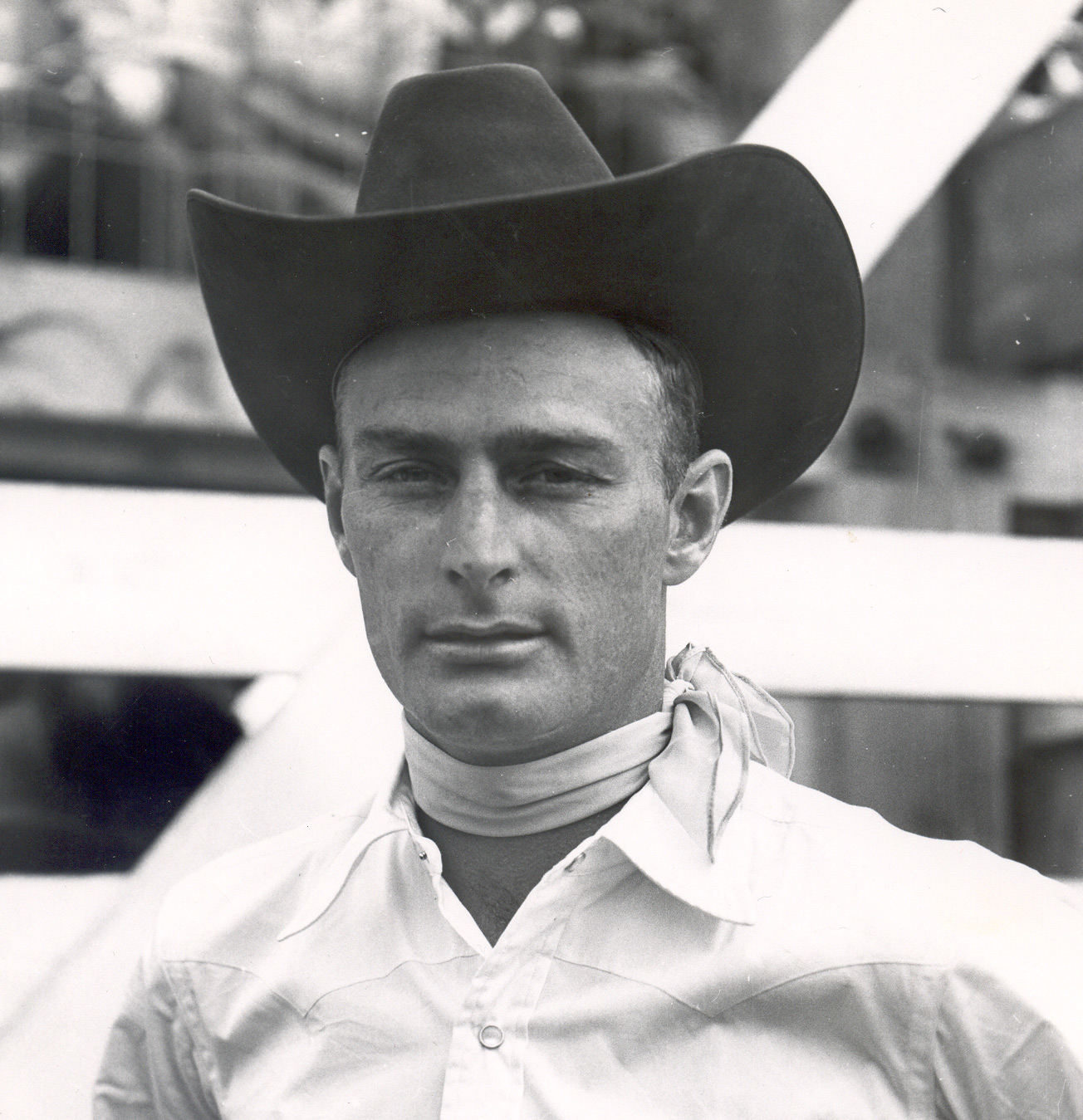
Twice All Around World Champion cowboy in 1942 and 1948.
First Kansas cowboy to become ALL AROUND CHAMPION cowboy of the world in 1942 and again in 1948. Only cowboy in the world to win championship as a member of the Turtle Association and again as a member of the RCA.
Gerald Roberts was born in Council Grove, Kansas, October 5, 1919. When Gerald was a small child, the family moved to Strong City where he attended grade school and high school. He could ride a horse before he could walk and he rode wild horses to school to “break” them along the way. He, Margie and Ken used to amuse the neighborhood by having rodeos in their backyard. “Dad used to buy young colts by the carload. Ken, Marge and I used to break them while riding to school. I guess that is how we really learned to ride.” In his first 14 years of rodeo he accumulated 10 saddles and 40 belt buckles.
Gerald was the very first Professional Rodeo Cowboy to endorse Wrangler Jeans. At the height of his career in the mid-1950’s, Gerald became a stunt man in Hollywood in many Westerns of the day including the motion picture movie Cowboy with Jack Lemmon and Glenn Ford.
In 1955, Gerald became an original inductee in the National Rodeo Hall of Fame in Oklahoma City, Oklahoma. In 1961, Gerald became the first cowboy to ever be inducted into the Kansas Sports Hall of Fame in Wichita, Kansas. In 1990, Gerald was inducted into the Pro Rodeo Hall of Fame in Colorado Springs, Colorado. On July 31, 2005, Gerald Roberts was inducted into the Kansas Cowboy Hall Of Fame in Dodge City, Kansas, and in March of 2026, Gerald Roberts was inducted into the Reno Rodeo Hall of Fame.
More information about Gerald Roberts and the Roberts Rodeo Family is available at www.GeraldRoberts.com.
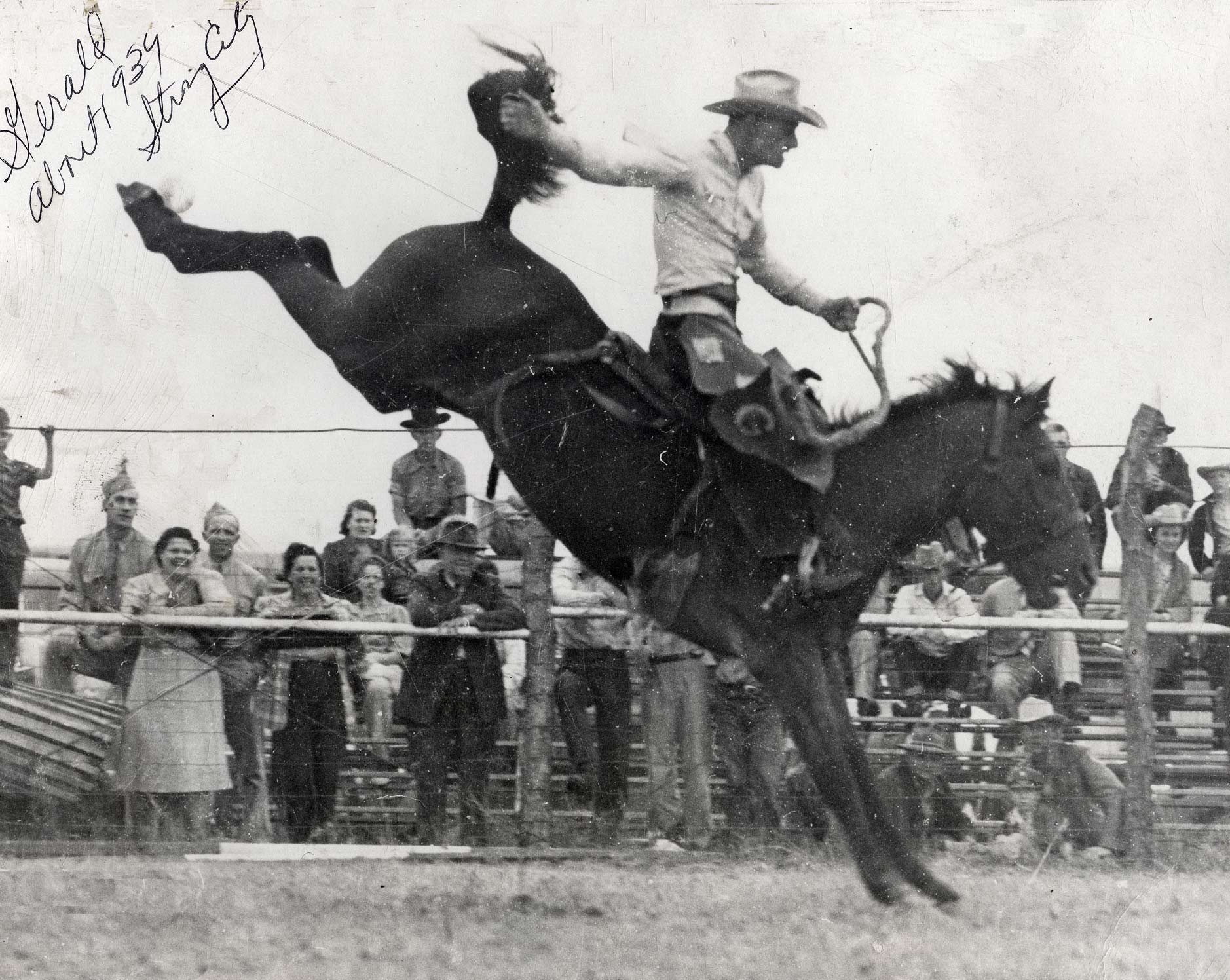
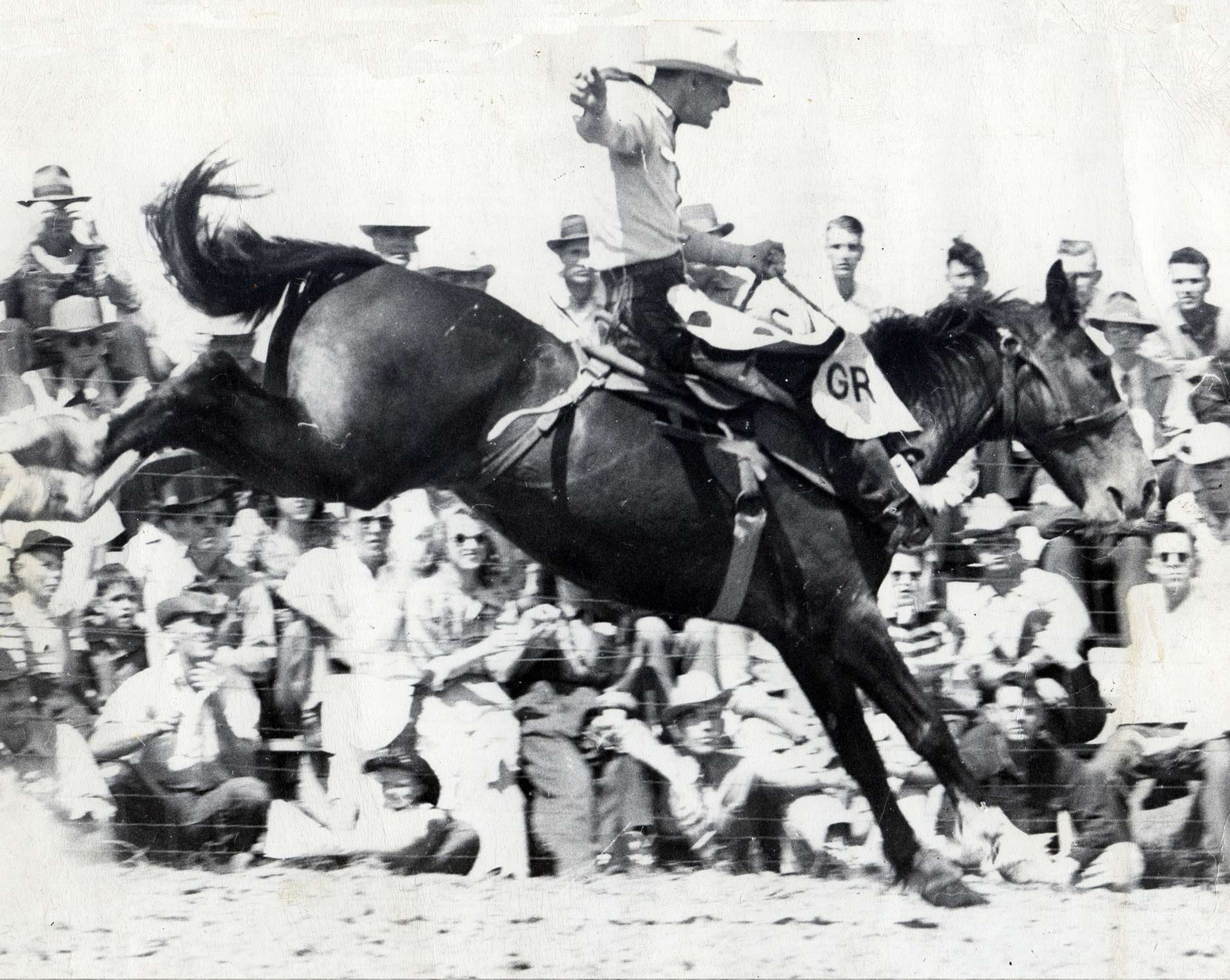
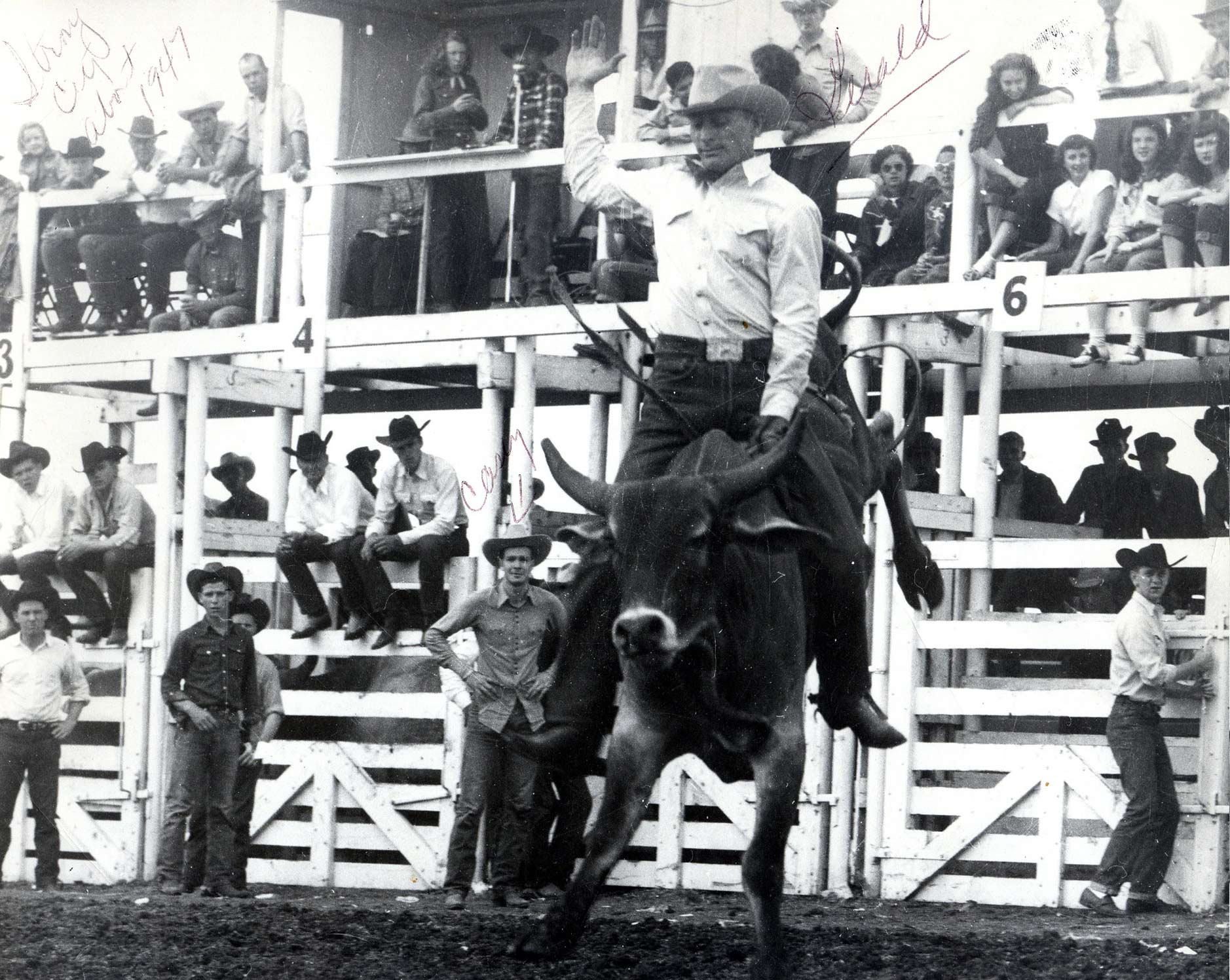
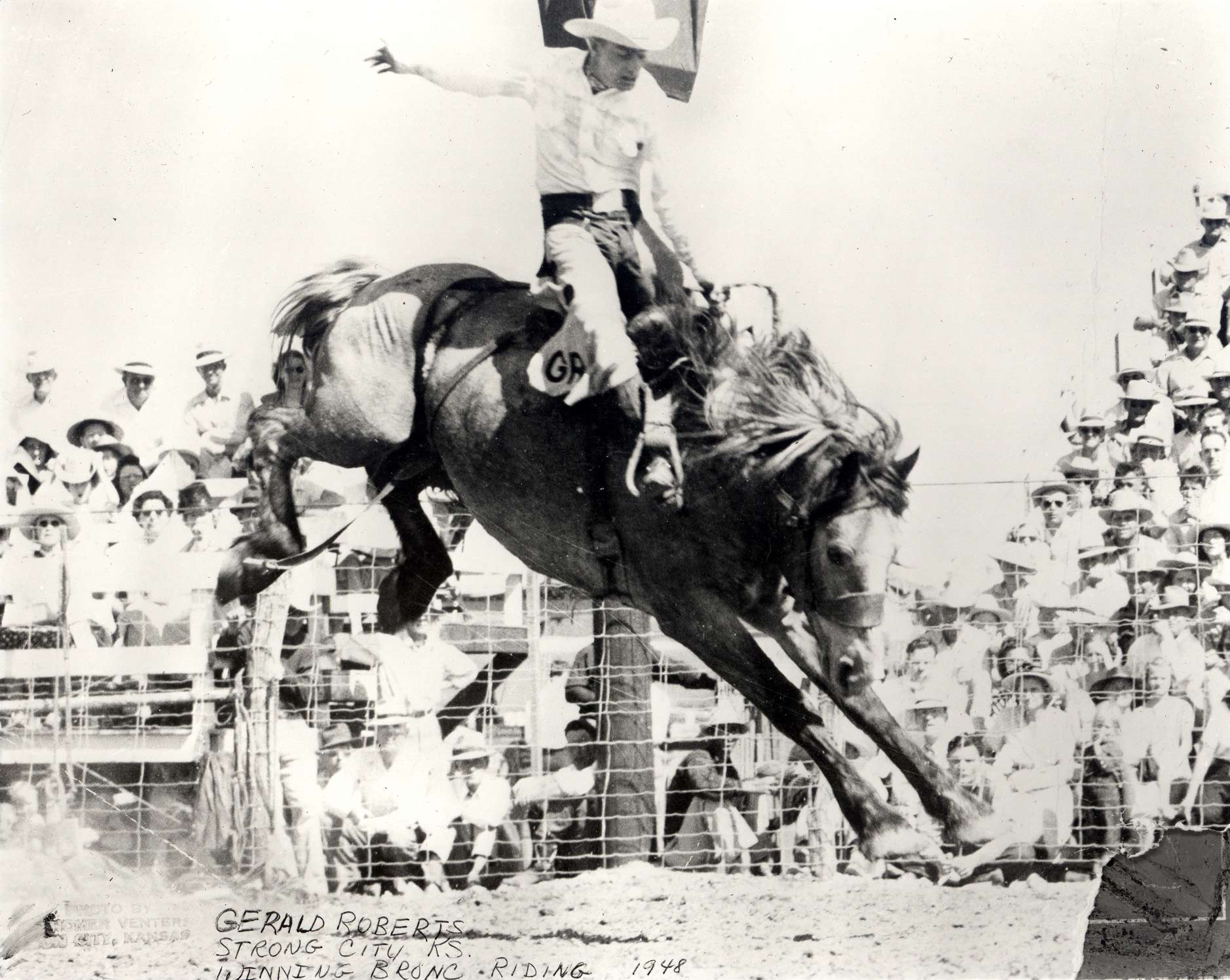
To honor this rodeo family who founded the rodeo in Strong City, a six by twenty foot mural was erected and dedicated on the Flint Hills Rodeo grounds in June of 1994. The mural features the paintings by local artists; Dena Kleinsorge, Peggy Lyon, Audrey Murrell and Debbie Schroer. These paintings have been moved in order to protect them from the elements and can now be viewed on the back wall of the east ticket booth.
The Early Rodeo Grounds
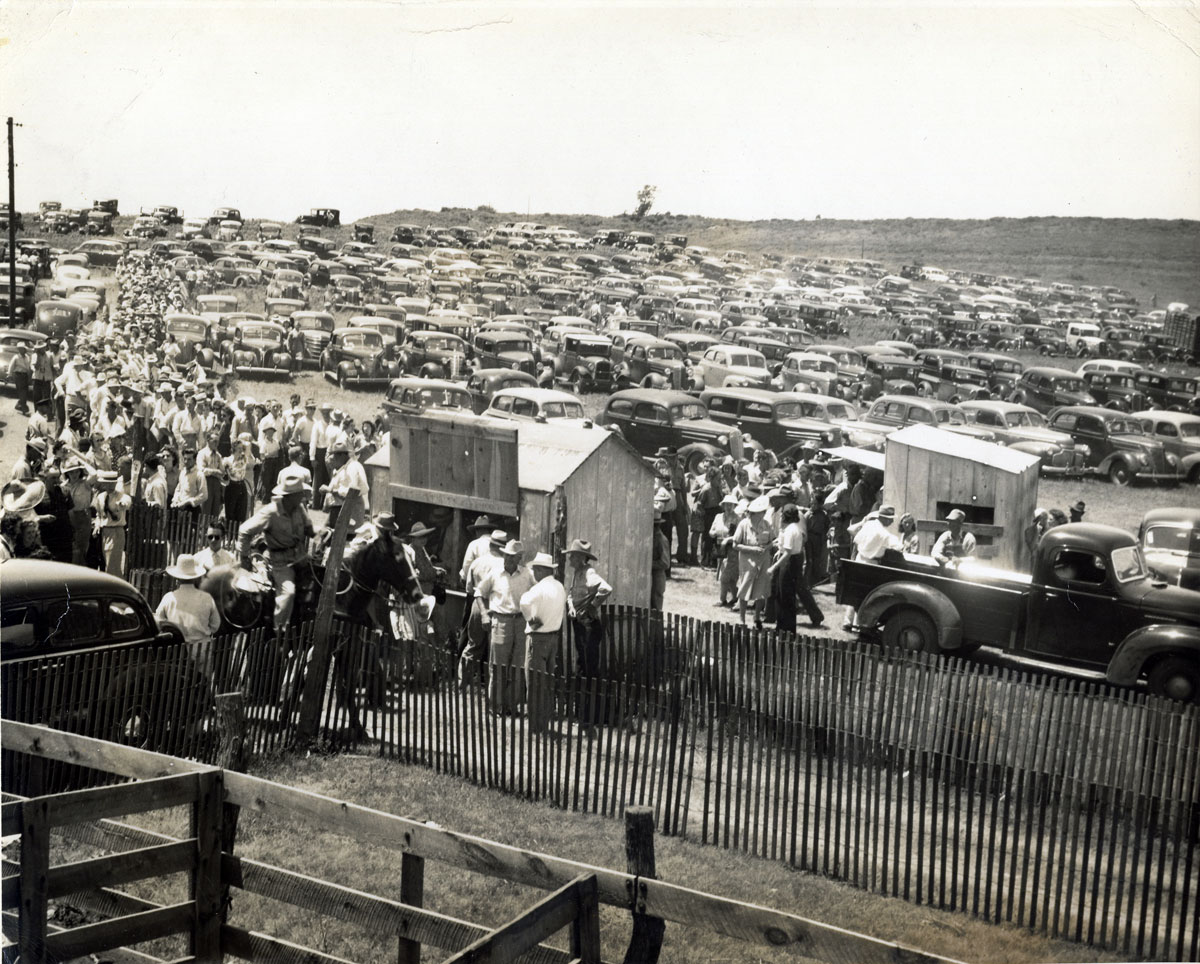
This photograph offers a wonderful glimpse into the early years of the Flint Hills Rodeo, taken before the construction of permanent grounds in 1948. Long rows of gleaming automobiles – mostly late-1930s models – line the open prairie, their presence signaling both the growing mobility of the era and rodeo’s wide popularity, not just in the Flint Hills, but across the entire country.
Flint Hills Rodeo, early rodeo grounds
Flint Hills Rodeo, early rodeo grounds
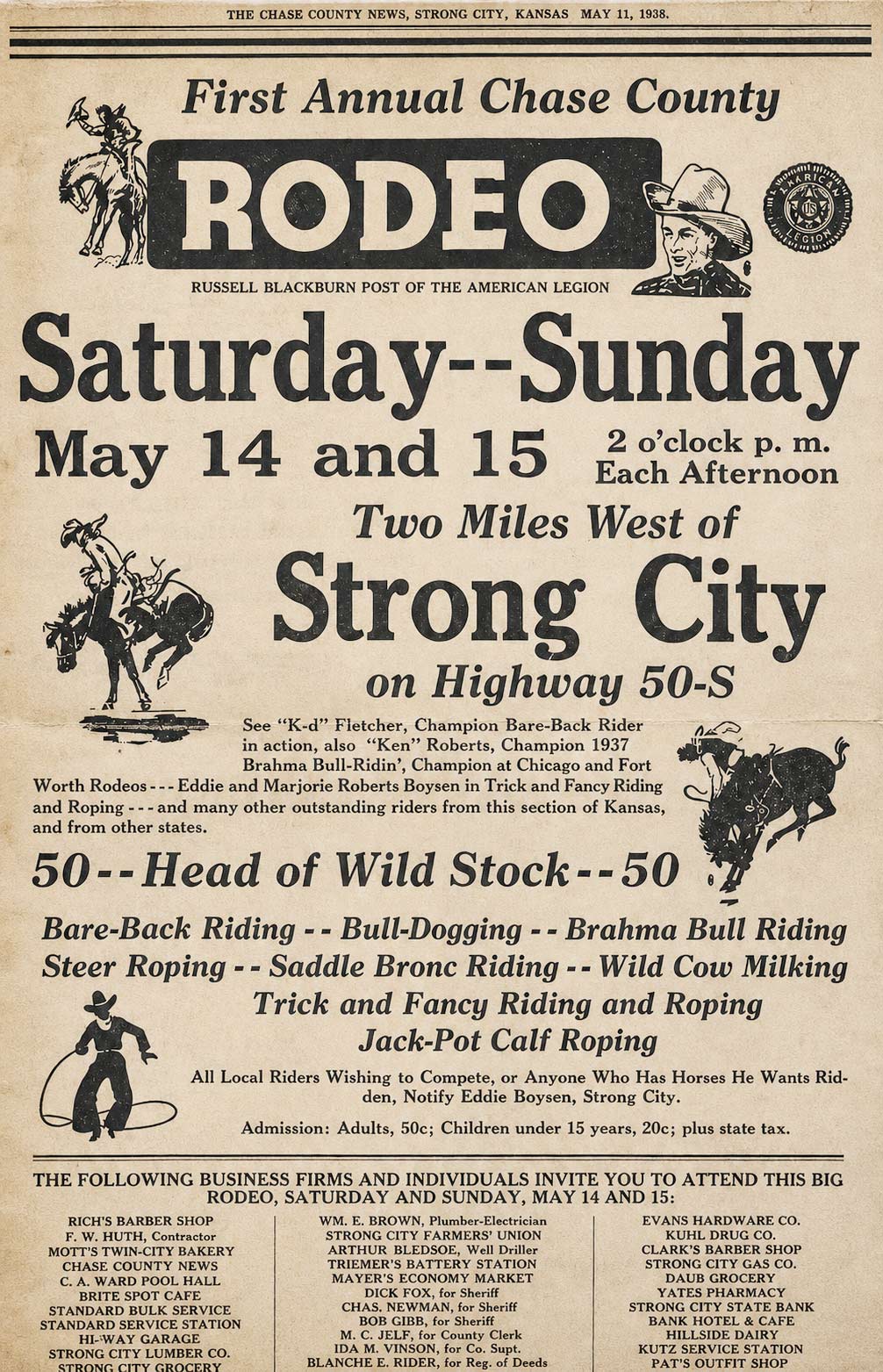
1st Annual Flint Hills Rodeo Ad – 1938 (this was the 2nd rodeo event but the first annual!)
Photo: 1st Annual Flint Hills Rodeo Ad - 1938 (this was the 2nd rodeo event but the first annual!)
Chronology of the Flint Hills Rodeo
- 1937 – The very first Flint Hills Rodeo was held in 1937 on E.C. Roberts’ farm.
- 1938 – Dubbed the “1st ANNUAL Flint Hills Rodeo” because now it’s happened again! Held at E.C. Roberts’ farm, sponsored by the local American Legion. “A large corral is being constructed at the Roberts’ farm. Snow fence, secured to steel posts and surmounted by a woven-wire fence, is being used. Cars can be driven to the corral.”
- 1939 – 2nd Annual Flint Hills Rodeo held May 20-21, 1939 on E.C. Roberts’ farm. Sponsors were the local American Legion Post; Flint Hills Rodeo Association formed with shares of stock sold to the public.
- 1940 – 3rd Annual Flint Hills Rodeo – Flint Hills Rodeo Association nominates the following directors: C. F. Holmberg, president; Wallace Evans, E.C. Roberts, H. B. Iliff, Roy Conklin, Curt Benninghoven, M. C. Kline, Wayne Keller, Carl Barr, Harold Wiebrecht.
- 1941 – 4th Annual Flint Hills Rodeo – Flint Hills Rodeo Association directors: Mel Provost, president; Harold Wiebrecht, vice president; Curt Benninghoven, secretary; M. C. Kline, treasurer; E.C. Roberts, H. B. Iliff, Roy Conklin, Wallace Evans, C.P. Holmberg, Ray Gordon, M.C. Jelf.
- 1942 – 2019 – These years held the “5th Annual Flint Hills Rodeo” all the way to the “82nd Annual Flint Hills Rodeo.” Land was purchased for a permanent rodeo grounds north of Strong City on Hwy 50 in 1948. The Roberts Family home was on the hill adjacent to the new rodeo grounds.
- 2020 – For the first time in its history, the Flint Hills Rodeo was not held (due to COVID).
- 2021 to present day – 2021 marked the “83rd Annual Flint Hills Rodeo” (it would have been the 84th but we skipped 2020); and we’re adding to the tally each year!
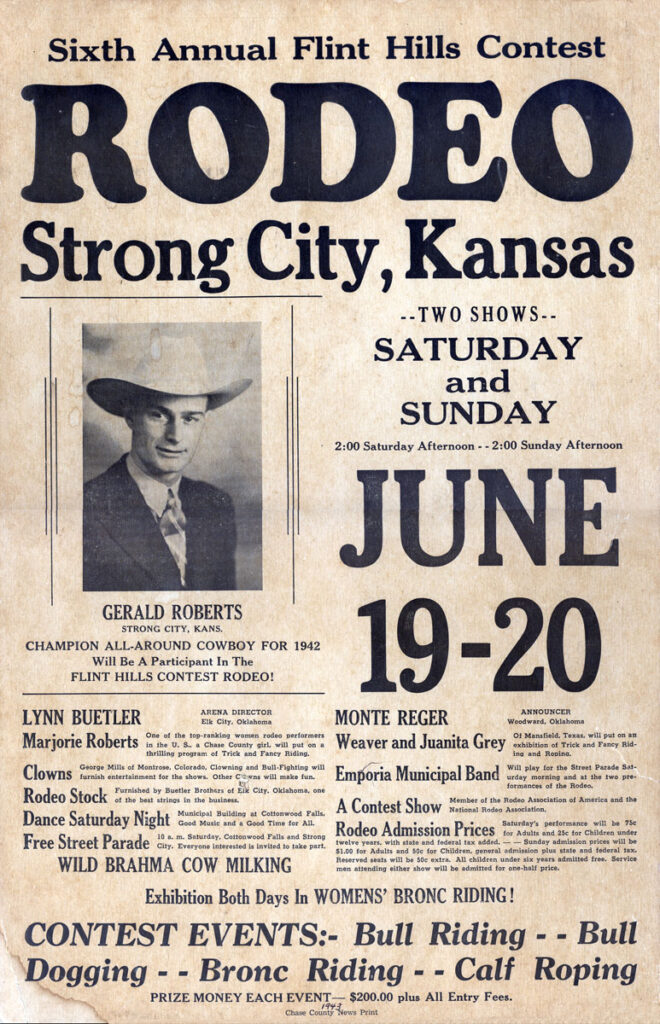
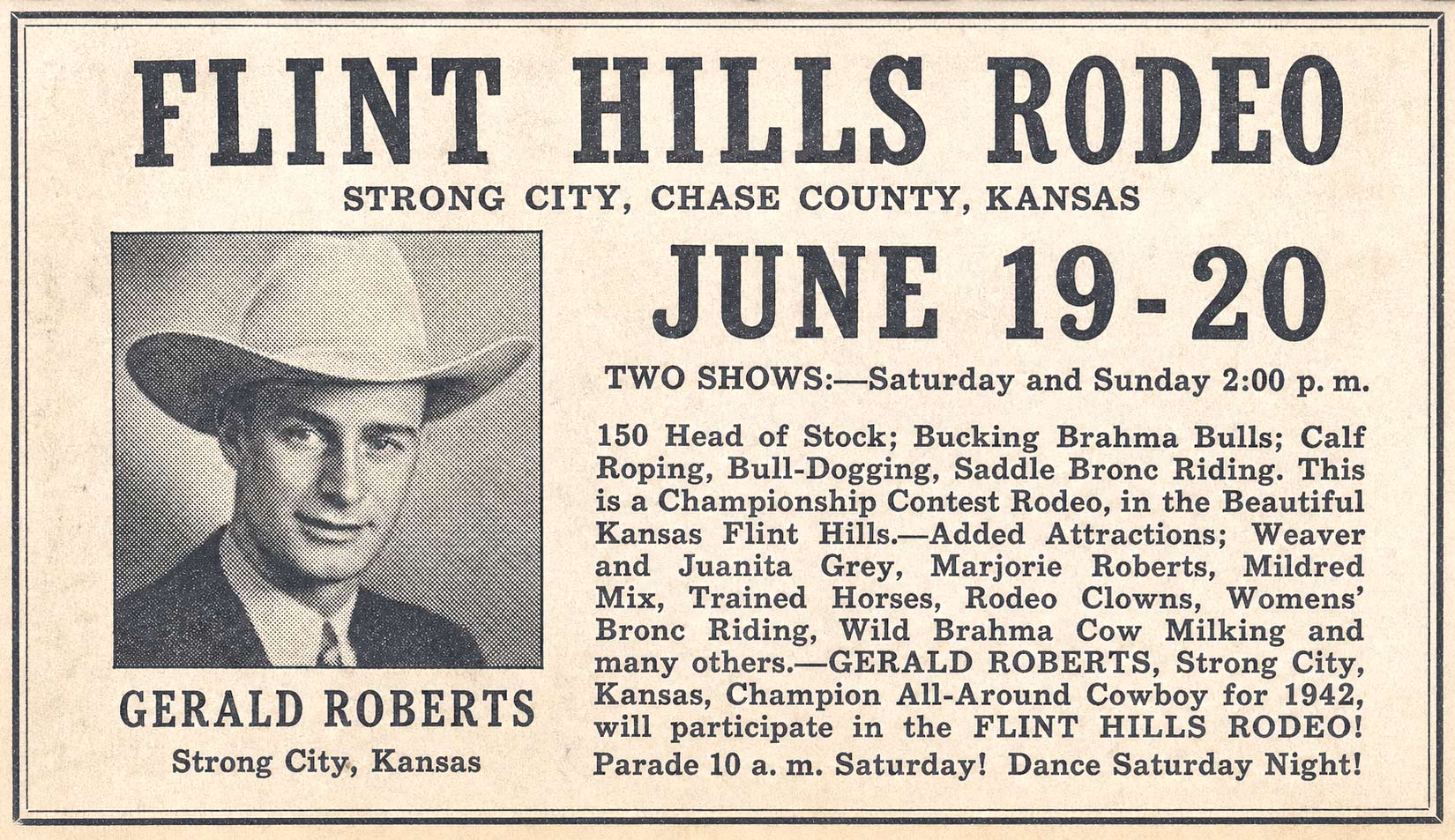
Rodeo poster in the Chase County News for the 6th Annual Flint Hills Rodeo in June 1943!
Photo: Rodeo poster in the Chase County News for the 6th Annual Flint Hills Rodeo in June 1943!
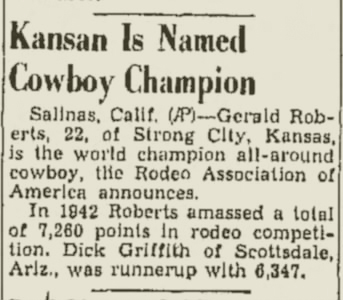
Fun fact – Gerald Roberts is the only rodeo cowboy to win the All-Around Championship under 2 rodeo associations. He won his first in 1942 under the Rodeo Cowboys Association (RCA) and his second in 1948 under the Pro Rodeo Cowboys Association (PRCA).
1943 – The 6th Annual Flint Hills Rodeo
Rodeo poster in the Chase County News for the 6th Annual Flint Hills Rodeo in June 1943!
The poster features a photo of Gerald Roberts, the hometown rodeo champion who had just won his first of two All-Around World Champion Rodeo Cowboy titles in 1942. Gerald would go on to win his second All-Around title in 1948 and the Calgary All-Around in 1950.
Featured at the Flint Hills Rodeo in 1943:
- Gerald Roberts – Champion All-Around Cowboy for 1942
- Lynn Buetler – Arena Director of Elk City, OK
- Marjorie Roberts – One of the top-ranking women rodeo performers in the U.S., a Chase County girl, will put on a thrilling program of Trick and Fancy Riding.
- Clowns – George Mills of Montrose, Colorado. Clowning and Bull-Fighting will furnish entertainment for the shows. Other clowns will make fun.
- Rodeo Stock – Furnished by Buetler Brothers of Elk City, Oklahoma, one of the best strings in the business.
- Monte Reger – Announcer of Woodward, OK
- Weaver and Jaunita Grey – of Mansfield, Texas, will put on an exhibition of Trick and Fancy Riding and Roping.
Contest Events at the 1943 Flint Hills Rodeo:
- Bull Riding
- Bull Dogging
- Bronc Riding
- Calf Roping
- Exhibition both days in Women’s Bronc Riding!
“A contest show – members of the Rodeo Association of America and the National Rodeo Association.”
For more historical information, please visit the following links: